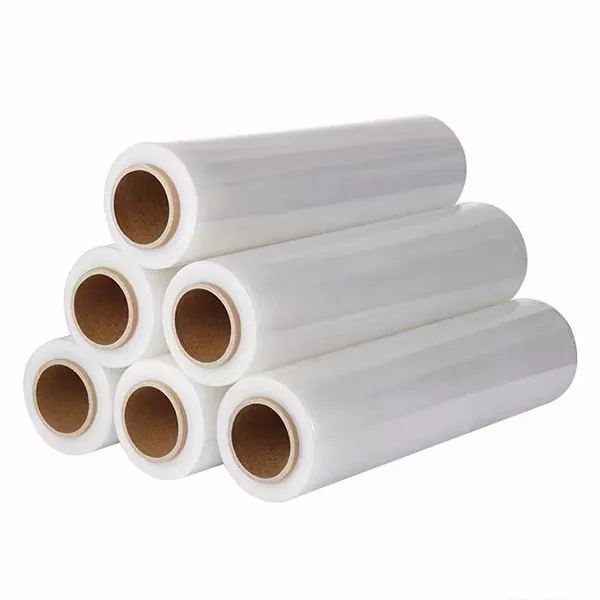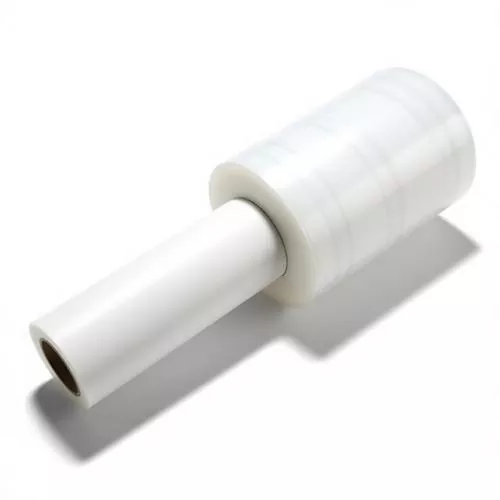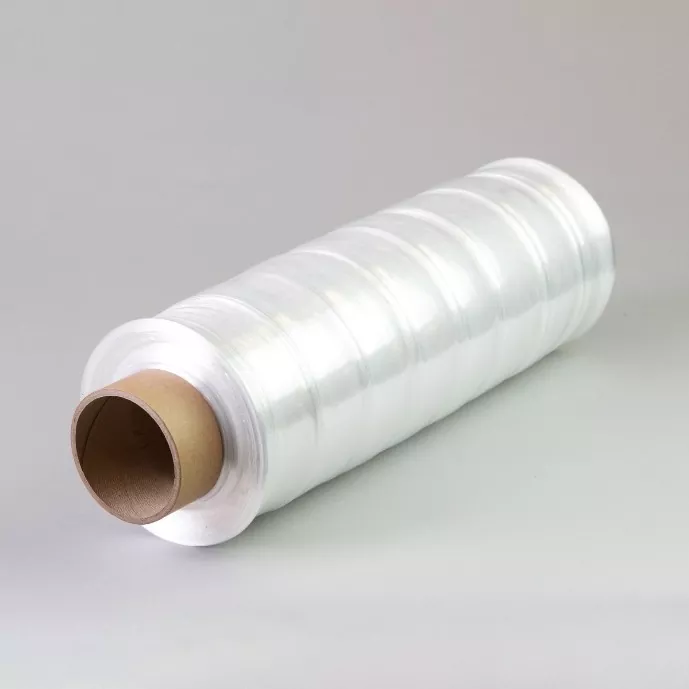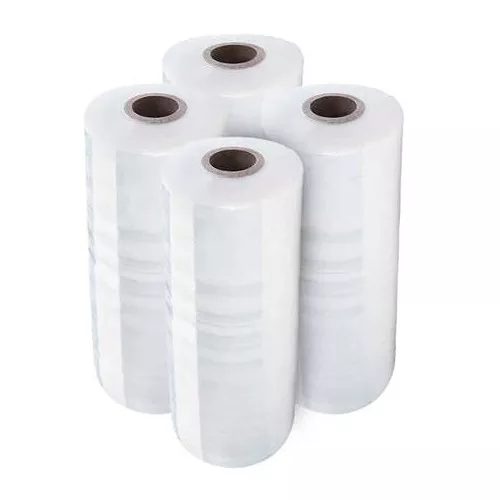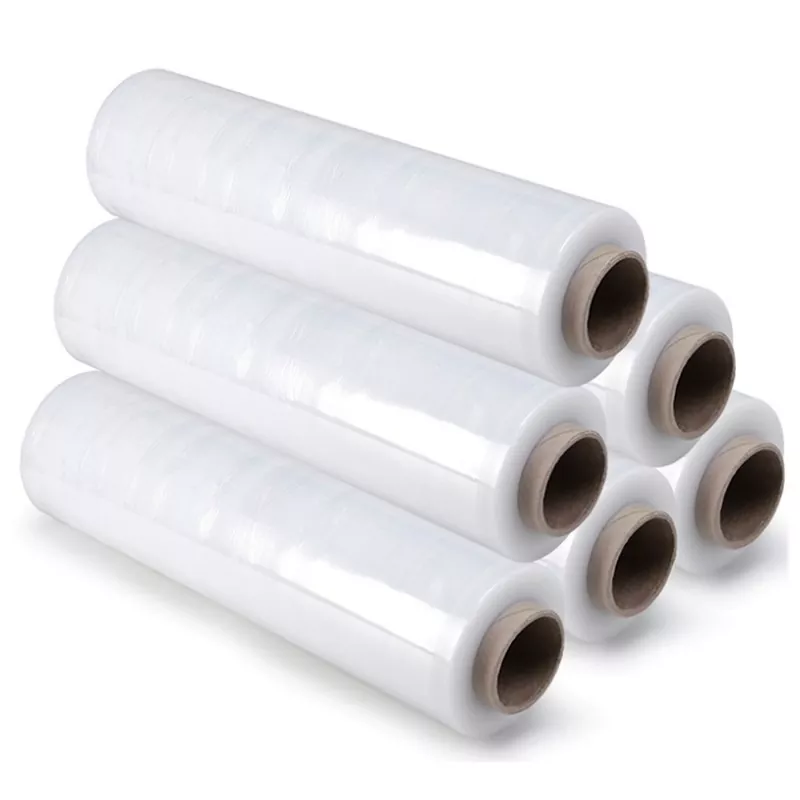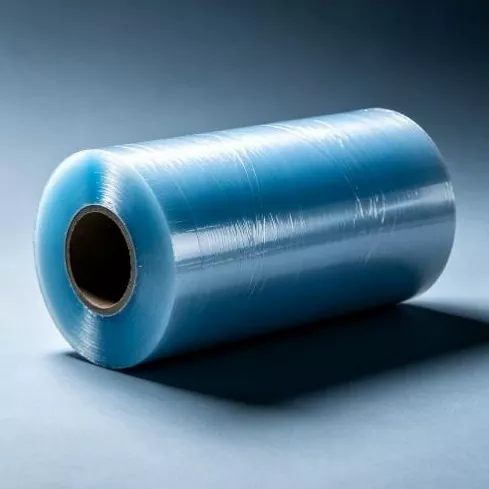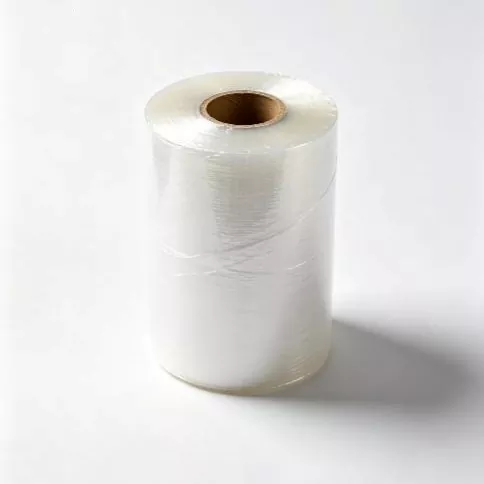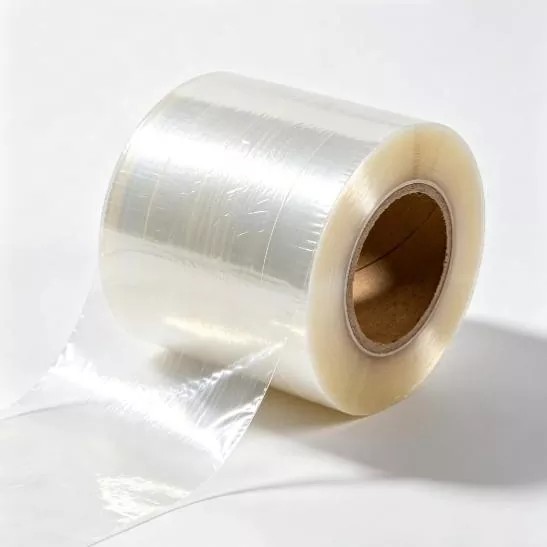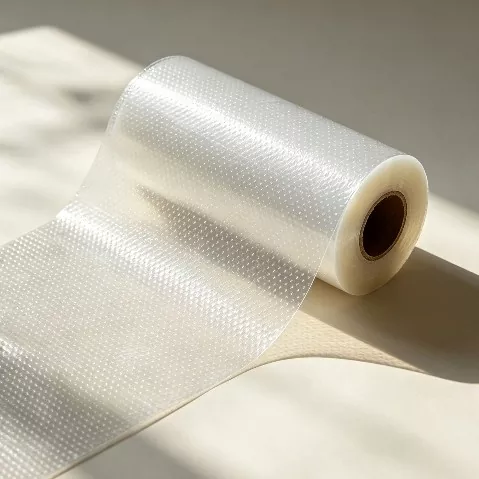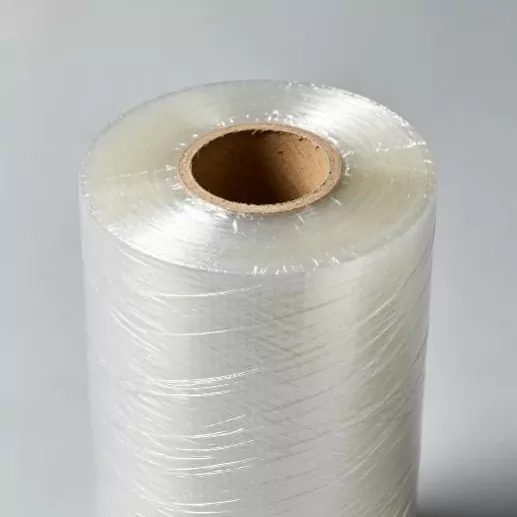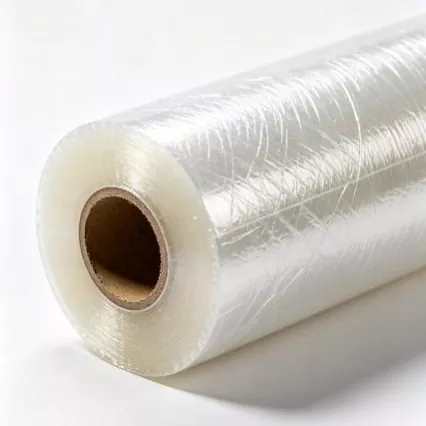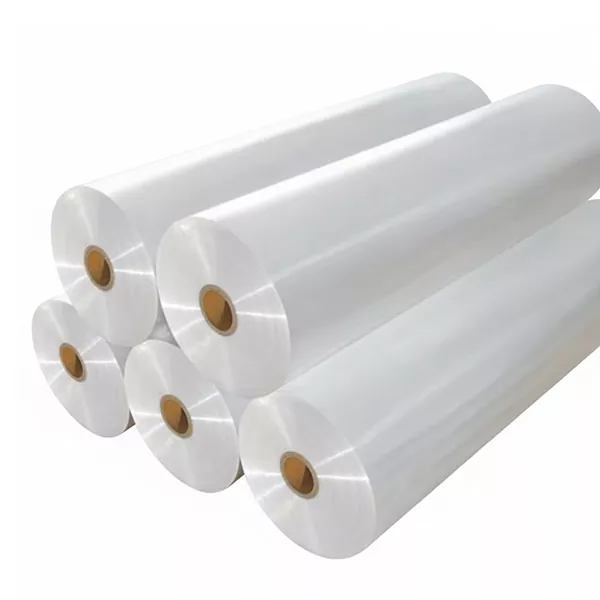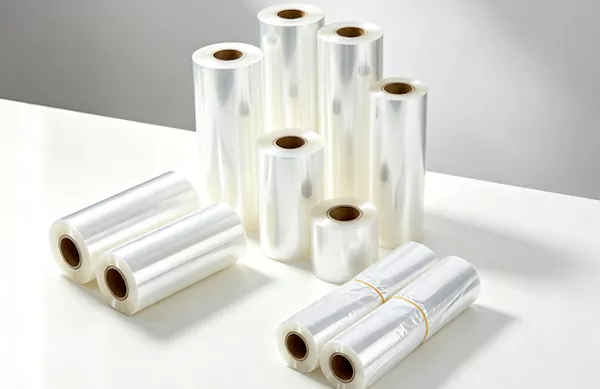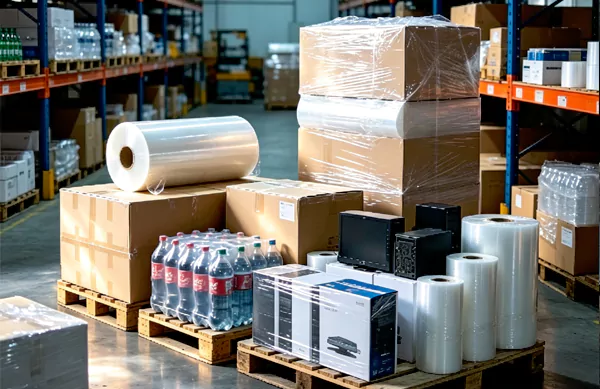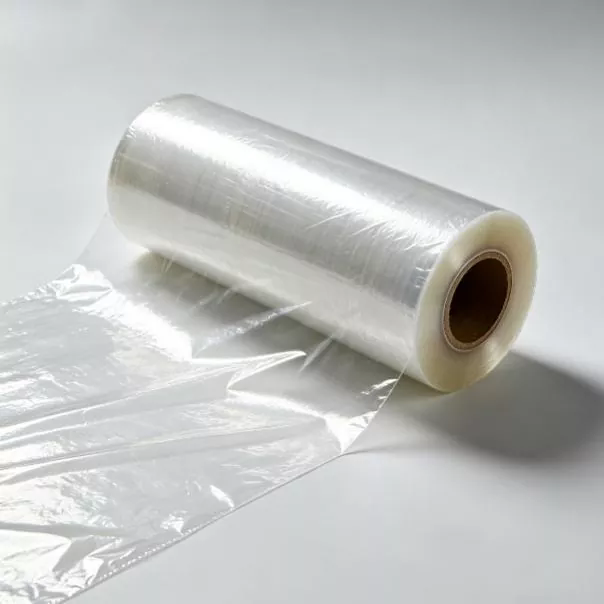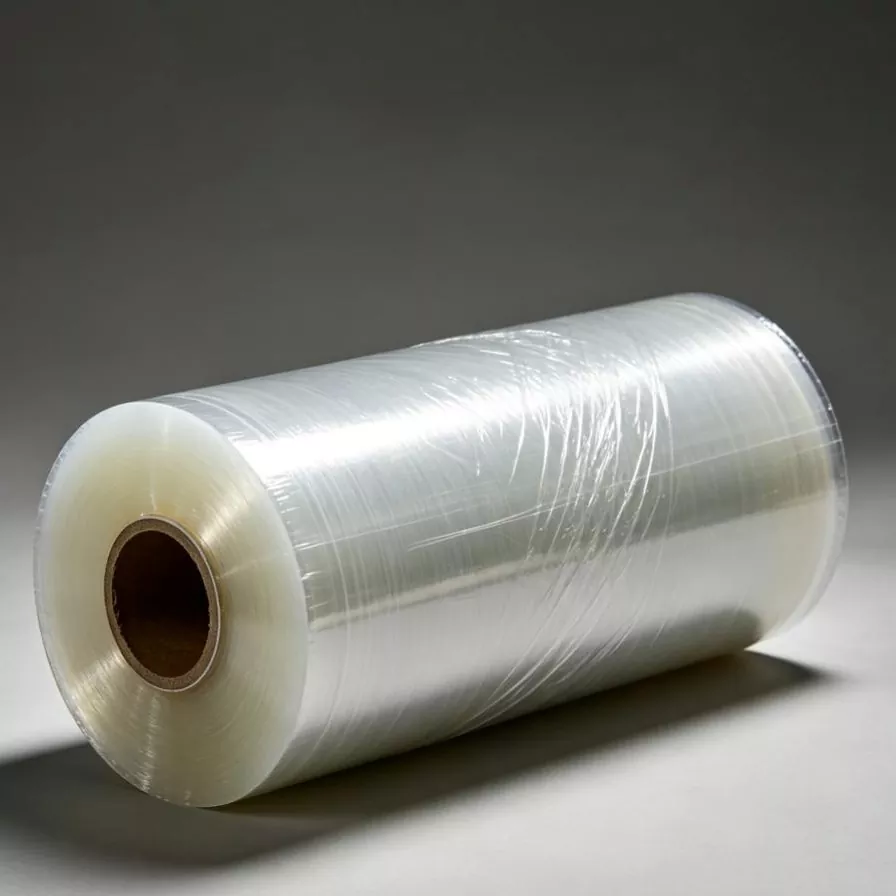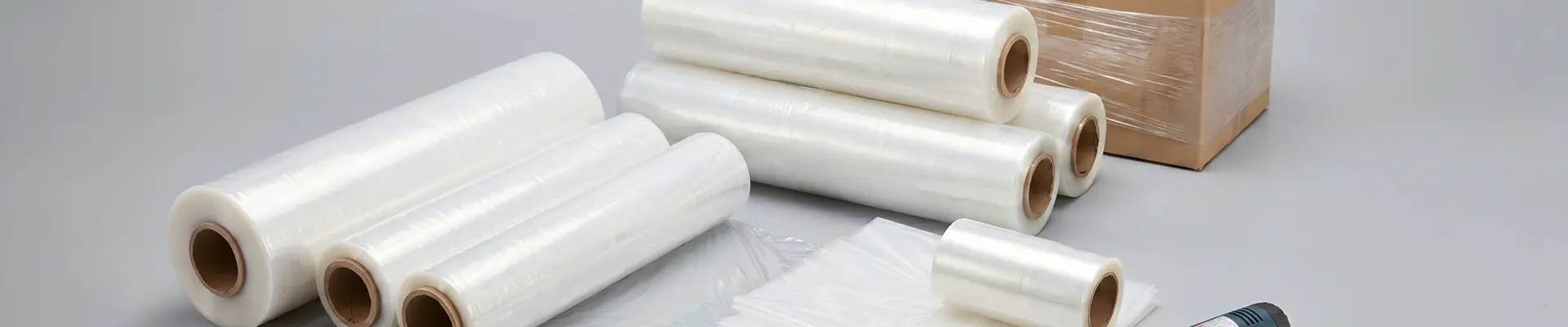
Yuhong is a professional manufacturer and supplier of anti-static stretch film. Designed to facilitate the rapid dissipation of static charges, this film is suitable for the packaging and logistics of standard electronic components. It complies with the ANSI/ESD S20.20 standard and is available in two types: hand-grade film and machine-grade pre-stretched film.
Standard LLDPE stretch film is prone to generating high-voltage static electricity due to intense friction during unwinding and high-speed machine wrapping. This will bring some consequences during production for those who are unwilling to be seen:
1. Component breakdown: Electrostatic discharge (ESD) can directly damage sensitive chips and PCBs.
2. Dust attraction: Electrostatic attraction draws in airborne particles, contaminating cleanrooms or high-precision instruments.
3. Explosion risk: In environments containing flammable gases or combustible dust, static sparks can trigger fires or explosions.
Anti-static stretch film, however, is a specialized functional film produced by incorporating anti-static masterbatch into LLDPE resin. During wrapping, stretching, and transport, it actively inhibits the accumulation of static charges and rapidly dissipates any generated static electricity, thereby preventing high-voltage electrostatic discharge.
By incorporating anti-static additives, this stretch film offers static control capabilities, minimizing the potential impact of electrostatic discharge on sensitive products.
While providing anti-static functionality, the static control film retains the mechanical properties of standard LLDPE stretch film. It meets various tension requirements, offers elongation, and provides stable recovery and self-adhesion, suitable for pallet wrapping, logistics, and industrial product packaging.
By reducing static attraction, the film helps keep the packaging surface clean and minimizes contamination issues during transport.
Yuhong's products are designed to accommodate various packaging methods and continuous production needs. Featuring uniform thickness and consistent stretch performance, the film is compatible with manual wrapping as well as semi-automatic and fully automatic packaging equipment.
|
Technical Parameter |
Unit |
Typical Value |
Test Standard / Note |
|
Surface resistivity |
Ω/sq |
10⁶ ~ 10¹¹ |
ANSI/ESD S20.20 |
|
Static decay time |
s |
≤2 |
GB/T 14447 |
|
Film thickness |
μm |
20 |
ESD safe for electronics |
|
Feature |
- |
Prevent static damage to sensitive electronic components |
For electronics workshop & packaging |
|
Comparison Items |
Anti-Static Stretch Film |
Standard Stretch Film |
|
Key Features |
Cargo stabilization + Static control |
Load securing + basic protection |
|
Electrostatic Properties |
Formulated with anti-static additives to reduce static buildup |
No specialized static control capabilities; prone to generating static electricity during friction |
|
Suitable Products |
Suitable for static-sensitive products such as electronic components, semiconductors, PCBs, and precision equipment |
Standard cartons, palletized goods, industrial products, etc. |
|
Dust-Proofing Capability |
Reduces static-induced attraction of dust and particles |
Static electricity may cause dust to adhere to the film surface |
|
Application Environment |
Ideal for ESD-protected areas, cleanroom environments, and high-precision manufacturing settings |
Standard warehousing and logistics environments |
|
Material Cost |
Higher cost due to the inclusion of functional additives |
Low cost; suitable for large-scale, general-purpose packaging |
|
Key Purchasing Factors |
Key factors: Static control performance, surface resistivity, and application suitability |
Stretchability, self-adhesion, thickness, and packaging efficiency |
Choose standard stretch wrap for non-electrostatic-sensitive goods such as cartons, paper products, standard beverages, building materials, and ordinary furniture.
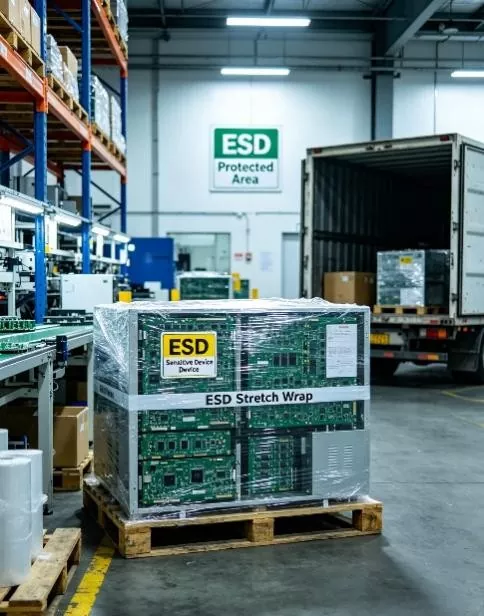
Choose ESD stretch wrap for items involving IC chips, PCBs, consumer electronic components, precision medical instruments, or chemical powders/liquids, or for goods requiring handling within cleanrooms.
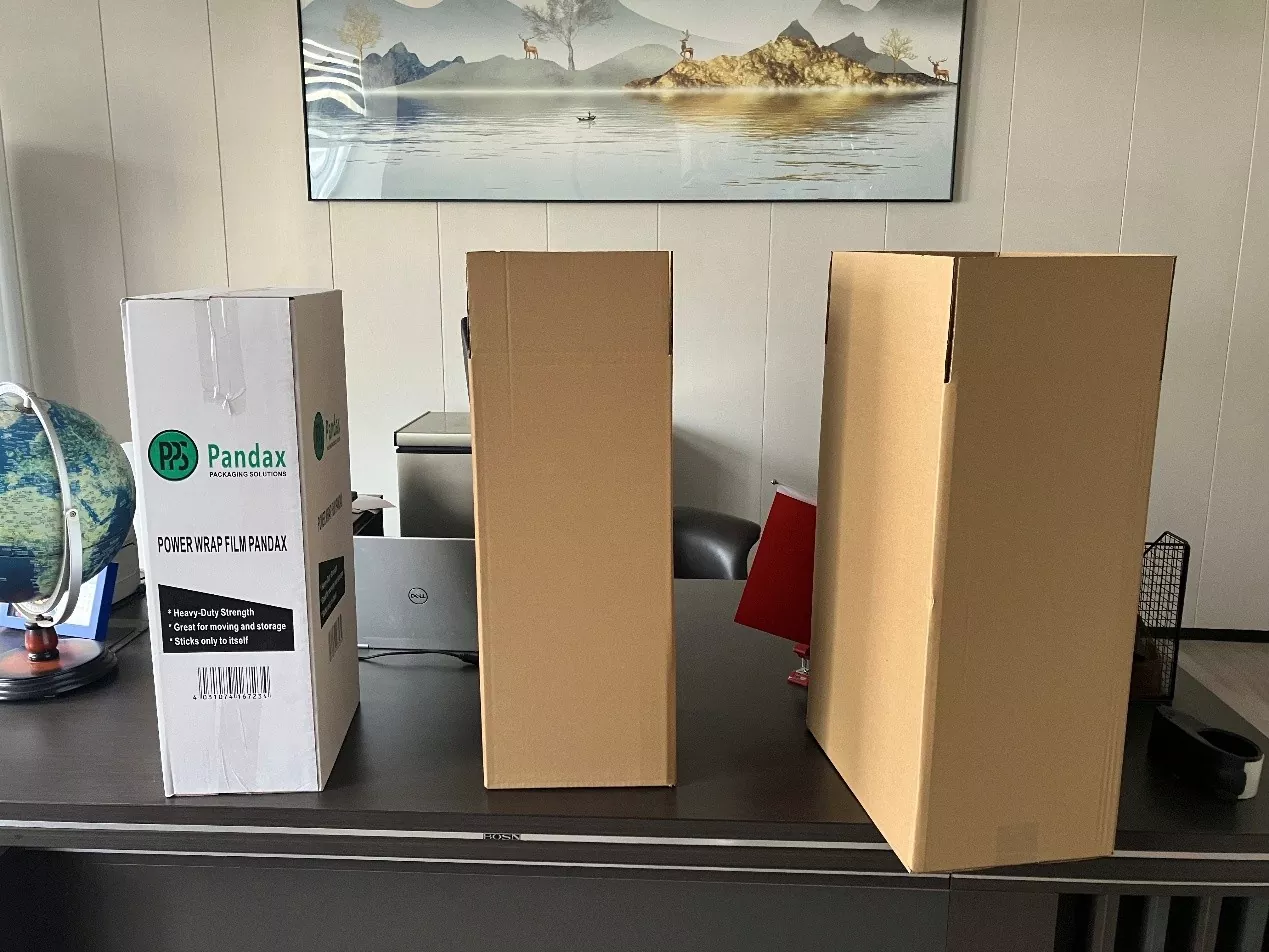
Suitable products: IC chips, electronic parts (resistors, capacitors, etc.), connectors, sensors, electronic modules, etc.
Advantages: Reduces the risk of static electricity accumulation and dust attraction; enhances product safety during transport.
Suitable products: Semiconductor components, wafer-related equipment, semiconductor production auxiliary materials, precision electronic modules, etc.
Advantages: Can be used in conjunction with anti-static bags, trays, and other materials to create a multi-layered ESD protection system.
Suitable industries: PCB manufacturing, electronics assembly, EMS (Electronics Manufacturing Services) plants, etc.
Advantages: Reduces the risk of electrostatic discharge (ESD) and minimizes dust particle adhesion.
Suitable products: Automation equipment parts, industrial control equipment, measuring instruments, optical equipment, etc.
Advantages: Anti-static machine film provides simultaneous load stabilization, dust protection, and static control.
Suitable products: Industrial robot components, automation equipment modules, electrical control cabinet parts, precision mechanical parts, etc.
Advantages: Compatible with industrial logistics workflows; reduces static risks; offers greater stability and reliability.
Suitable products: Medical monitoring equipment components, electronic medical instruments, precision medical parts, etc.
Advantages: Minimizes static interference; serves as stable outer packaging; prevents equipment contamination during transport.
Do not store ESD-safe wrap for extended periods in high-temperature areas exposed to direct sunlight or in extremely dry environments (below 20% RH), as this can adversely affect the rate of static dissipation.
Antistatic additives within the film migrate slowly over time and with temperature fluctuations; unused rolls should be stored in a cool, dry warehouse at temperatures between 15°C and 25°C.
Antistatic packaging requires the use of antistatic film throughout the entire wrapping process; it must not be mixed with standard stretch wrap.
Customizing the film in pink or blue and affixing ESD warning labels to the exterior of the package is recommended to prevent misuse.
After packaging goods that are highly sensitive to ESD, it is recommended to use a surface resistance tester to verify the surface resistivity of the pallet wrap, ensuring it remains stable within the range of 10⁶ to 10¹¹ Ω/sq.
|
Common Issues |
Possible Causes |
Solutions |
|
Film prone to breakage |
Insufficient thickness, excessive stretching |
Adjust film thickness or reduce the stretch ratio |
|
Load shifting during transport |
Insufficient wrapping tension |
Increase the number of wrapping layers or adjust tension |
|
Persistent static electricity issues |
Packaging environment does not meet requirements |
Improve ESD management measures |
|
Significant dust attraction |
Environmental contamination or inadequate static control |
Enhance the packaging environment |
|
Low packaging efficiency |
Film-equipment incompatibility |
Select the appropriate machine-grade film specifications |
|
Product deformation due to pressure |
Excessive tension |
Reduce wrapping pressure |
Before production, please provide Yuhong with the following information:
|
Category |
Specific Content |
|
Basic information |
Item to be packaged, industry, dimensions, weight |
|
Usage environment |
Standard environment, ESD-controlled area, or cleanroom |
|
Specifications |
Thickness, width, length, core specifications |
|
Antistatic requirements |
ESD class, surface resistivity requirements |
|
Packaging method |
Manual or automated packaging |
|
Appearance requirements |
Color, printing, packaging style |
Based on the target surface resistivity, we blend Linear Low-Density Polyethylene (LLDPE) resin with internal antistatic masterbatch and tackifiers (PIB/EVA) using an automated loss-in-weight feeding system and a high-speed mixer to ensure uniformity.
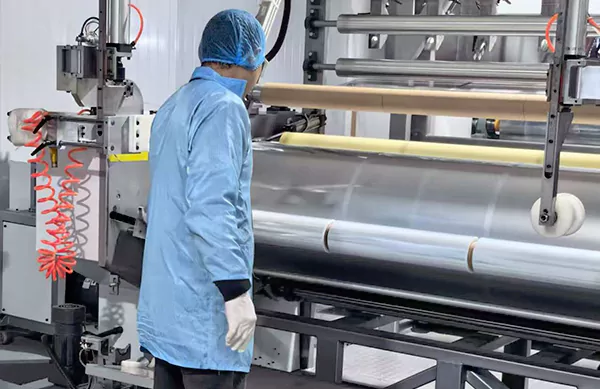
Our factory is equipped with fully automated multilayer co-extrusion film lines. The blended materials are melted and plasticized in extruders and co-extruded into a composite structure in a single step.
The material is then rapidly cooled and set on chill rolls to form an unstretched cast sheet with uniform thickness.
After passing through multiple preheating rolls, the cast sheet enters the longitudinal stretching unit for machine-direction orientation, followed by an oven for transverse-direction stretching.
High-temperature heat setting follows the stretching process to eliminate internal residual stress and lock in dimensional stability.
High-voltage corona discharge treats the film surface to increase surface tension, thereby improving adhesion for subsequent printing or lamination processes.
During production, high-precision beta-ray thickness gauges and electrostatic testers monitor thickness tolerances and surface resistivity; the system automatically adjusts settings if deviations are detected.
Yuhong utilizes fully automated slitting machines to slit the film to customer-specified widths.
Static elimination devices, such as ionizing air bars, are installed at critical friction points during slitting and winding to prevent the accumulation of new static charges caused by mechanical friction.
Before each batch of anti-static stretch film is placed into inventory, our laboratory tests it for surface resistivity (ASTM D257), tensile strength and elongation at break, thickness tolerance, and light transmission.
Films that pass inspection are sealed in moisture-proof paper or PE bags and labeled for traceability—displaying the batch number, production date, and resistivity test data—in preparation for shipment.
A: Yuhong utilizes an integrated polymer anti-static technology, allowing anti-static molecules to migrate continuously and steadily to the film's surface.
Under standard, dry storage conditions, the performance remains stable for 12 to 18 months.
A: Yes, though international shipping costs must be covered by the customer; these costs can be fully deducted from the value of a formal bulk order.
A: Yes. Our anti-static film is non-shedding and generates no surface dust, making it suitable for outer packaging and material handling in Class 10,000 and Class 1,000 cleanrooms.
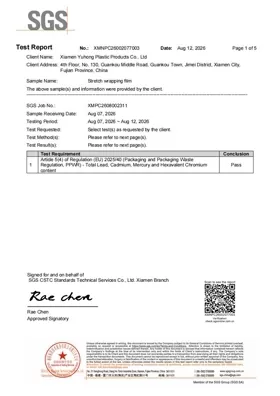
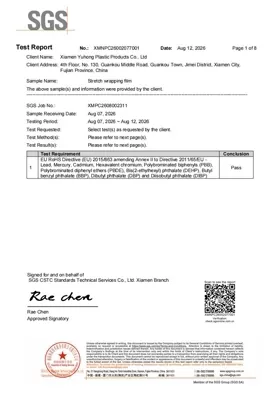
A: Yes. Our ESD stretch wrap is made from pure LLDPE material; it is free of halogens and heavy metals, strictly adhering to international environmental standards such as RoHS and REACH.
The material is recyclable, meeting requirements for environmental compliance and sustainability.
Address
4th Floor, No. 130, Guankou Middle Road, Guankou Town, Jimei District, Xiamen City, Fujian Province, China
Tel